Sandbar Sharks
Back to the Monitoring Hub
Increase population
Data collection in progress
Gökova Bay to Cape Gelidonya
Türkiye
Problem: The Gökova Bay area is important for the Mediterranean population of this globally Endangered species, but sandbar sharks are threatened by fishing and disturbance by boats.
Action: No-Fishing Zones (NFZs) have been established, which provide fish a refuge from being caught and therefore an increase in the abundance of prey species, as well as reducing the disturbance associated with fishing boats.
Indicator: An increase in observations of sandbar shark (Carcharhinus plumbeus) indicates an increase in usage of the seascape by this species as a result of the creation of effective protected areas. It also indicates a possible increase in prey biomass, and reduced disturbance by fishers and their boats, both possible impacts of No-Fishing Zones.
Methods
GoPro cameras sited along the known swimming route of sandbar sharks in Boncuk Bay, Gökova were deployed and retrieved, between March and September 2019 for baseline data. Each camera recorded for a maximum of 3.5 hours per deployment, with one to three cameras deployed on each monitoring day. November 2020 was the last time AKD used the sited GoPro camera monitoring, and in July 2021 a new Full HD continuous shark monitoring system was installed, composed of two underwater cameras in the same location as previously sited GoPro cameras, and one dome camera positioned on land, to observe activity from the shore. This solar powered system began continuous monitoring from August 2021 and provided data during daylight hours. Comparability between the two camera systems was limited as the GoPro data provided data only over spring and summer. In addition, camera malfunctions, maintenance and repair meant data collection was non-continuous, but data for 2022 are representative of a more consistent year of monitoring than 2021.
All footage was viewed by video analysts who recorded the number of shark observations. Individual sharks were not identifiable by visible characteristics, so each observation was counted as a unique sighting of a single shark, unless sharks appeared in one frame together or passed in the same direction immediately after one another and were without doubt unique individuals. This data was also used to calculate the average number of individuals per observation, calculated by dividing the yearly count of individuals sighted by the yearly number of separate observations. A higher value for this ‘individuals per observation’ metric would suggest the presence of larger group sizes. This allowed some standardisation for different camera operating times in different periods.
From 2021-2023, snorkel transects were also conducted along an approx. 40 minute transect (out and back). Surveys were conducted in summer months (May – July in 2021, May in 2022, and April – September in 2023). These visual observations, combined with GoPro data, provided additional information on the sex, size and number of individuals observed.

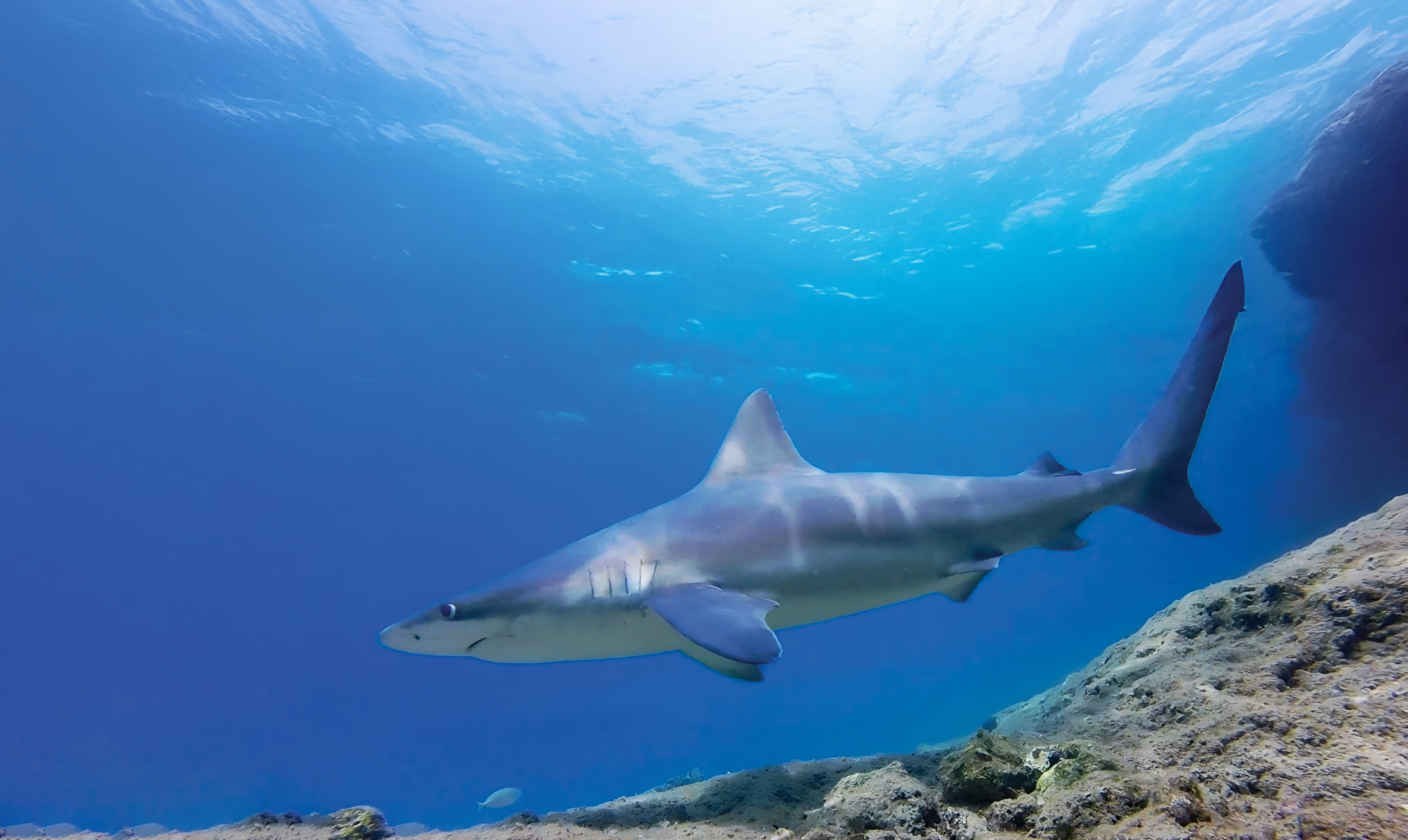
Sandbar shark in Boncuk Bay no-fishing zone, recorded from project monitoring camera. Photo: AKD.

Sandbar shark from above, recorded from drone. Photo: AKD.
Results
Statistical analyses of the data was not possible due to monitoring challenges, which led to a patchy dataset. Therefore, it was not possible to determine whether shark populations have increased or whether they were benefited by NFZs. Further years of monitoring data will provide the data needed to analyse this indicator.
Anecdotal observations of monitoring of sandbar shark from 2019 to 2023 highlight some potential seasonal and annual variability.
Snorkel surveys appeared to showed a higher activity (individuals per observation) in May and June (Fig. 1), consistent with known patterns of sandbar shark movement influenced by sea temperature, prey availability and mating behaviour. Similarly, the continuous monitoring camera system appeared to show fewer observations in late summer and autumn compared to spring and early summer (Fig. 1). From camera monitoring, the highest number of individuals in a single observation (11 sharks) was seen in May 2023.

Figure 1: Shark observation rates using camera monitoring and snorkel surveys. Observation rate for snorkelling represents number of individual sharks observed per snorkel survey, while observation rate for camera monitoring represents the average number of sharks seen observed at a time (total sharks observed divided by total separate observations). The two metrics are therefore not directly comparable.
Lessons learned
There were several challenges to achieving consistency in monitoring efforts, including weather conditions, as adverse weather limited deployment of snorkel surveys or camera equipment effectively and consistently. Logistical constraints included disruption from boat noise, which can alter shark behaviour and reduce observation reliability. Additionally, maintaining daily monitoring schedules was not always possible due to personnel availability, distance to the monitoring site and the operational costs associated with boat use and equipment maintenance. Observer and equipment variability were also a challenge as differences in snorkel surveyors’ experience and underwater camera specifications (positioning, angle, battery lifetime etc.) can introduce variability in data collection. In light of this the project team prioritised installation of the continuous monitoring camera for more consistent data collection.
Next steps
AKD will continue to monitor sandbar sharks and have now established a robust monitoring system. Data from this will help to improve understanding of sandbar shark activity and populations, and the impact of NFZs.
These findings emphasise the value of long-term monitoring in assessing the outcomes of conservation efforts and the Gökova as an important habitat for sandbar sharks, especially during specific months. The results can guide targeted management strategies, such as continuing and sustaining the protection of nursery and mating areas while adjusting fishing practices during peak shark activity seasons.
Artificial Intelligence solutions for data analyses (C. plumbeus identification) were trialled, but not used during the project period due to challenges with the size of the dataset and the connectivity to internet at the study site. However, AKD are continuing to focus on how AI can be integrated into analysis to reduce the need for time-consuming viewing and manual identification of video footage.
Publications
Kızılkaya, Z., Saydam, E., Walker, K. et al. Progress and challenges of multi-habitat marine restoration in the eastern Aegean Sea, Türkiye. npj Ocean Sustain 4, 12 (2025). https://doi.org/10.1038/s44183-025-00114-9
Partners