Tourist-Related Damage
Back to the Monitoring Hub
Decrease damage caused by tourism activities
No change observed
Gökova Bay to Cape Gelidonya
Türkiye
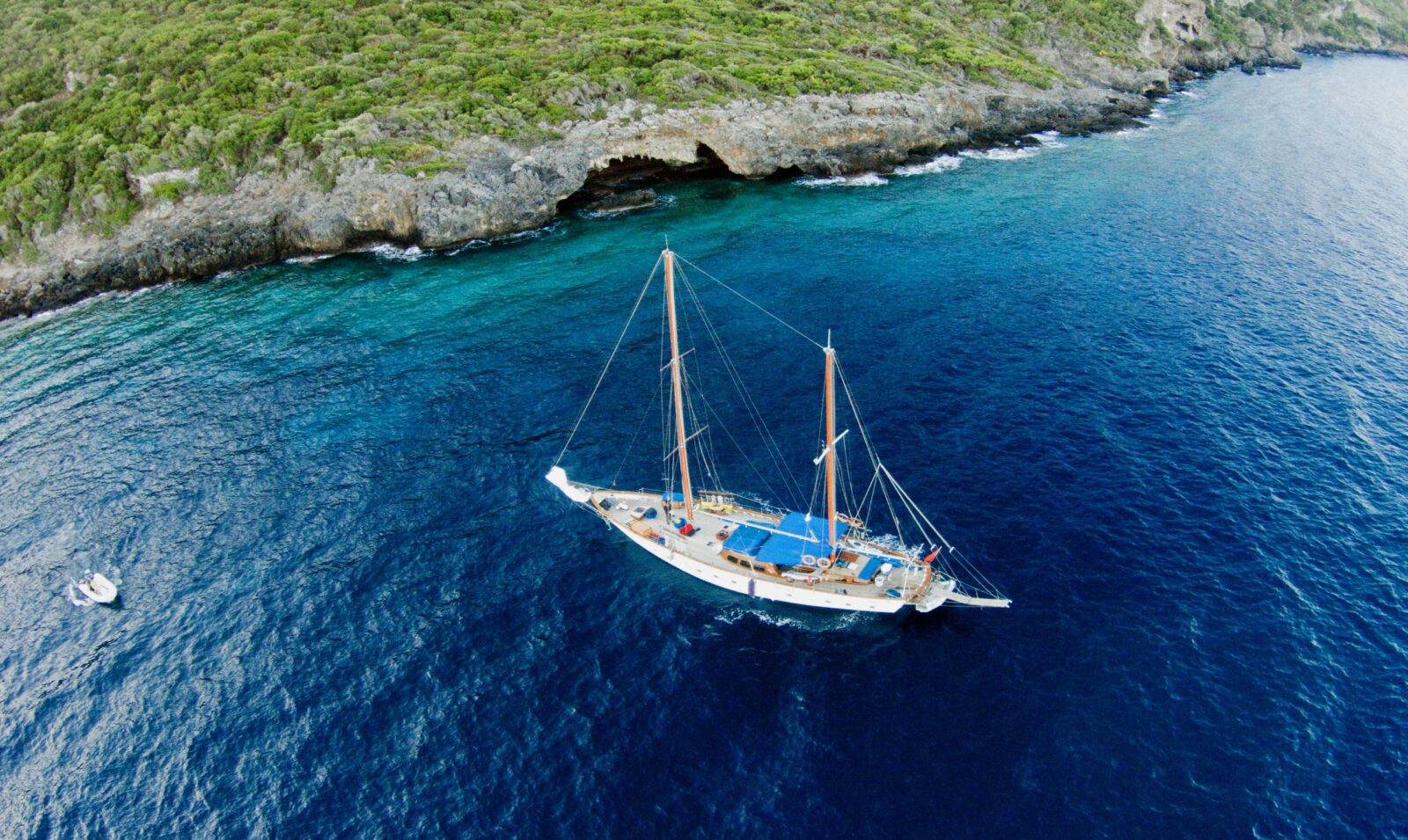
Problem: Although tourism is economically important to this seascape, some unsustainable tourism practices can have harmful effects. These include human presence in monk seal caves, which is distressing to the seals and often causes them to leave the cave and, in severe cases, the separation of mother and pup. Additional tourism pressures include boats anchoring on seagrass meadows, a critical habitat and food source for recovering fish populations and other marine biodiversity, and pollution.
Action: AKD provided a conservation-friendly certification scheme, awarding conservation-friendly flags to boats committing to the certification requirements, which they can use in their marketing. The scheme targeted key resource users and tourism businesses and educated them to avoid monk seal caves and not moor on seagrass beds. These outcomes were monitored by the patrol team. In addition, AKD hosted engagement, education and outreach events to inform people on risks facing the ecosystem.
Indicator: A reduction in reports or evidence of tourist-related pressures in priority sites (humans in monk seal caves and anchor scarring on seagrass beds) indicates the success of targeted awareness raising activities and increased protection of these critical habitats.
Methods
A system of cameras was used to monitor human disturbance of monk seals. 12 caves across the project area, which were assessed as potentially suitable monk seal habitat, were monitored for the ELSP-funding period. Cameras were deployed in these caves throughout the year between 2019 and 2023. When a camera was triggered, three consecutive photos were taken followed by a 15 – 20 second video. Additionally, in one cave in Gökova there was continuous real-time video monitoring using a 4K video surveillance system (two cameras). While these cameras were primarily used to monitor monk seals, it was also used to monitor entry by people into caves. This was used to calculate the number and duration of disturbance incidents. Events where a person was seen for a single trigger event, rather than repeated triggers, were included in data on number of disturbances but not disturbance duration.
Water damage and humid saline conditions meant the number of operational cameras varied throughout the monitoring period. Because the caves were remote and could only be visited every 3-4 months, it was difficult to pinpoint the time at which a camera stopped working. Although estimates were made of the percentage of time for which cameras in each cave were operational, these were not considered accurate enough to calculate an index for adjusted human disturbance. Therefore, the raw data were used, with the caveat that camera operationality varied across caves and years. On average cameras were operational an estimated 58.8% of the time, and yearly averages ranged from a low of 54.4% in 2023 to a high of 64.7% in 2020. Adjusting disturbance data using these values did not alter overall patterns.

Mediterranean monk seal within coastal cave in the project area. Photo: AKD.

Mediterranean monk seal and pup within coastal cave in the project area. Photo: AKD.
Results
Between 2019 and 2023, 349 human disturbance incidences were recorded in total across all the caves (Cave 1-12). Of these, 212 are single events and the disturbance duration cannot be calculated. In the remaining 137 incidences, 3,868 minutes of human disturbance were recorded (a mean duration of 28.2 minutes per disturbance).

Figure 1: Number of visits to caves by people (left) and duration of visits (right). Duration of visits includes only visits where a person was seen for more than a single camera trigger event, where it was therefore possible to calculate visit duration. Note that in the left graph, points are slightly horizontally offset to reduce overlap.
Interpretation
Results showed there was still human presence and pressure in the monitoring caves, reflecting the fact that Fethiye – Göcek is one of the most popular tourist areas, with intense boat tourism especially in summer. Many hotels with water sports centres are based on the coastline and tourism pressure therefore remains significant.
With the highest duration and number of incidents of human pressure, Cave 11 had many people coming to the cave by sea kayaks and small inflatable boats and spending time on the beach inside the cave, especially between May and October. Even if people noticed the camera trap and the information card related to the monitoring study, it was observed from footage that most of them remained in the cave. Thus, raising local people and tourists’ awareness of the species and its habitat via educational activities is crucial.
Although 2023 showed considerably lower minutes of human disturbance, this is thought to be because the camera in Cave 11, where the highest human disturbance was recorded in previous years, was not fully operational during 2023.
Partners