


Vultures
Back to the Monitoring Hub
Increase abundance of cinereous and bearded vultures
Improving
Iberian Highlands
Spain
Problem: Deforestation and poisoning have led to substantial declines in vulture populations and their ecological scavenging function in this landscape.
Action: Two vulture species, bearded vulture (Gypaetus barbatus) and cinereous vulture (Aegypius monachus), will be reintroduced into the project area to re-establish the local population.
Indicator: The abundance of each reintroduced species in the project landscape will initially indicate the success of species translocations and later their increasing ecosystem function as scavengers in the landscape.

Cinereous vulture, a species being released as part of the project. Photo: Rewilding Spain, Terra Naturalis.

Bearded vulture in La Campana. Photo: Rewilding Spain, Terra Naturalis.
Methods
The abundance of cinereous vultures will be assessed via direct observations, radiotracking and camera trapping at feeding sites, which will allow the births, deaths and movements of all birds to be monitored annually. All the vultures released by the project are fitted with a GPS tag, as well as identifying tags to differentiate them from vagrants that may arrive naturally in the project area.
Results
At the start of the project in 2022, no vultures had been introduced into the landscape (Fig. 1). Occasional vagrant birds were sighted, but none were residents in the project area.
In 2022-2023, 14 cinereous vultures were released in the Iberian Highlands, of which 10 were still alive in October 2023. 7 additional cinereous vultures were reintroduced in 2023-2024.
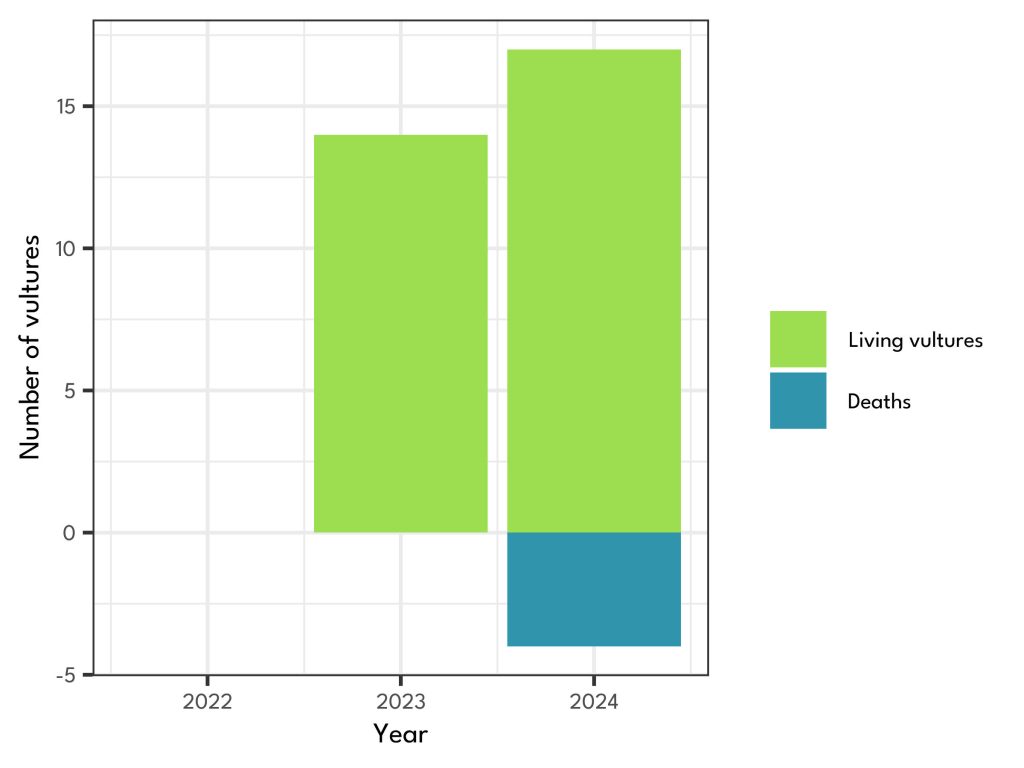
Figure 1: Number of reintroduced cinereous vultures since the project start in 2022.
Partners


